Speaker Context
Izabella Tabarovsky
Talk: From the Cold War to University Campuses Today: The USSR, the Third World, and Contemporary Antizionist Discourse
Hosted by: LSE Department of International History
I recently attended a lecture at the LSE Department of International History by Izabella Tabarovsky on how Soviet propaganda about Israel and Zionism made its way into the West, and why some of the same slogans are still being used on university campuses today. The lecture argued that the language being used in present-day demonstrations is not new. Many of the slogans were first developed in the USSR, then spread internationally through media, diplomacy and cultural events. I had not really thought about that link before, so a lot of the lecture was new to me.
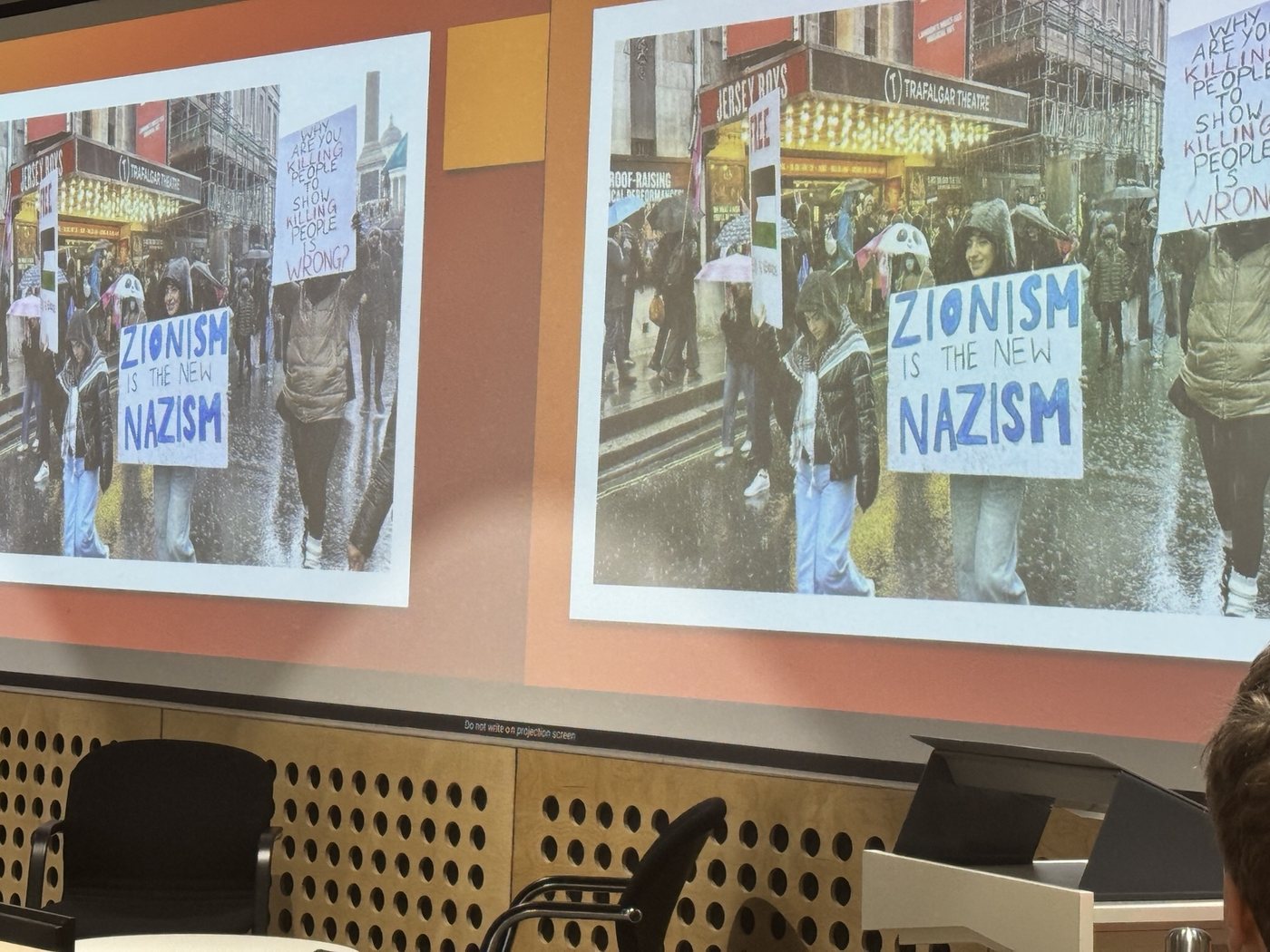
Tabarovsky began with her own background. She grew up in the USSR in the 1970s and was part of the wave of around 1.5 million Soviet Jews who left in around 1980. She said that Soviet Jews faced antisemitism in professional and academic settings, and that she had not personally experienced it again for about 23 years after immigrating to the United States in 1990. That changed for her around 2018, when she saw demonstrations on US campuses where the slogans were described as anti-zionist rather than antisemitic. She said the slogans were familiar to her from her childhood, because they matched older Soviet propaganda almost word for word. That observation set up the rest of the lecture.
She then went back to explain where this language came from. The Soviet state used anti-zionism as official policy, and one of the texts she pointed to was The Protocols of the Elders of Zion, which presented Jews as both sub-human and superhuman at the same time. The contradiction is important because she said it allowed propaganda to portray Jews as weak and dangerous in the same image. She also mentioned that Lenin and the Bolsheviks, when they came to power in 1917, actually banned antisemitic propaganda because it conflicted with communism. The imagery did not really disappear though, and she showed an example from a May Day festival in 1971 which used the same crooked nose caricature as earlier propaganda, but this time included a six-pointed star.
Stalin was a major part of the lecture. She mentioned an article he wrote in 1913 called Marxism and the National Question, where he argued that Jews were separate from society and that Zionism was wrong because it was dragging the Jewish poor away from preparing for the revolution. Under the Bolsheviks, Jewish people were helped, but on the condition that they became atheist, or they would be persecuted. There was a resurgence of Russian nationalism during the war, and Stalin only really appreciated Israel for geopolitical reasons that suited the USSR. After that, his anti-zionism hardened, especially through conspiracies like the “Doctor’s Plot,” which was claimed to be a plan to kill him. Soviet Yiddish was purged, and a popular conspiracy spread about Jews hiding behind a friendly façade. De-Stalinisation under Khrushchev involved isolating anti-zionism for a while, but it returned strongly later.
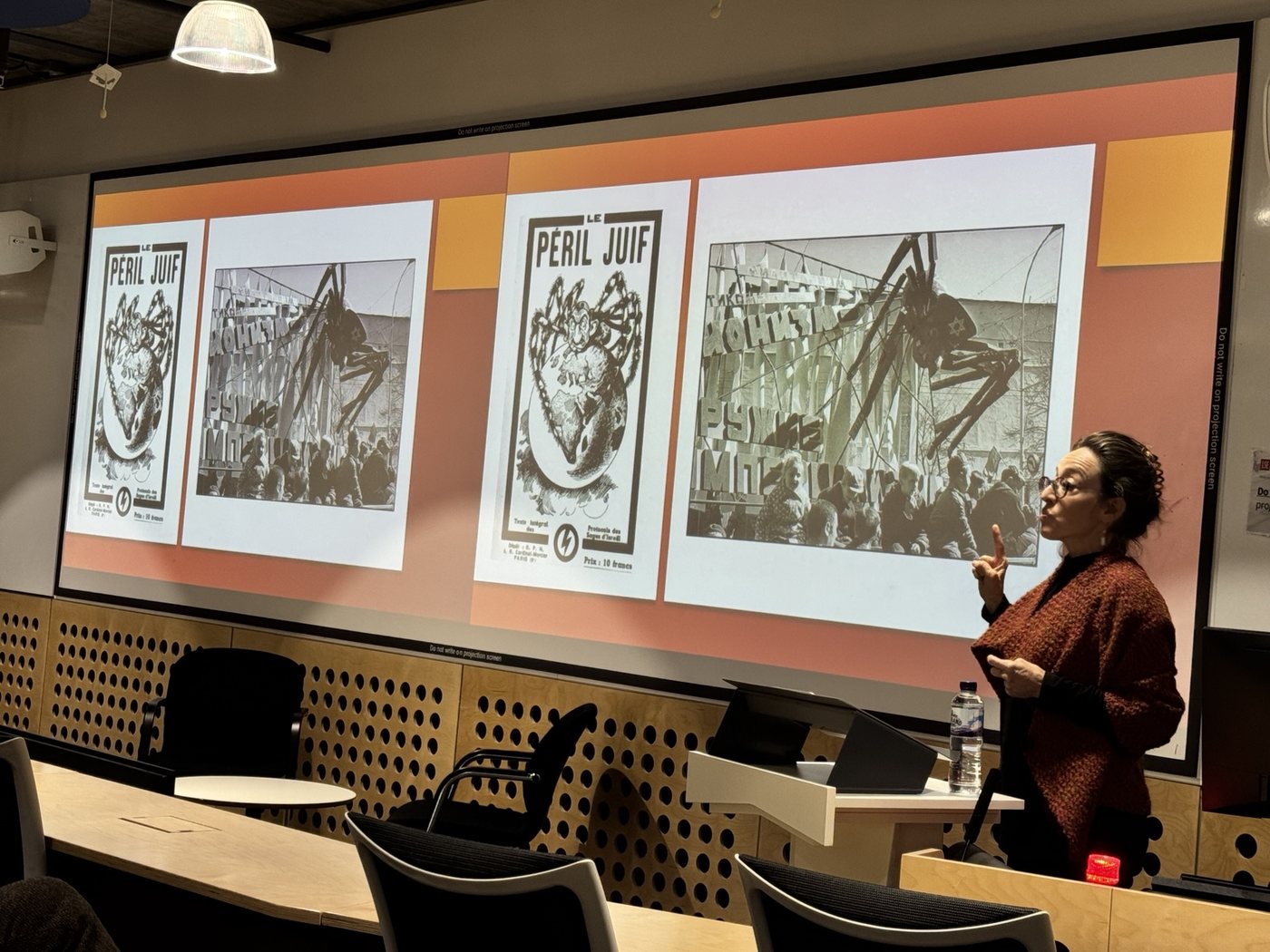
The lecture treated the 1967 Six Days’ War as a major turning point. The Arab states were expected to win, and the USSR backed them, but Israel won instead. That outcome shocked the Soviets and produced new conspiracy theories, including the idea that Israel had only won because of American support. The biggest one was the claim that Jews controlled all major institutions, which she said the Soviets reframed as “scientific antizionism,” presenting it as a serious form of analysis rather than a conspiracy theory. That was a useful point because it shows how propaganda can disguise itself by using academic-sounding language.
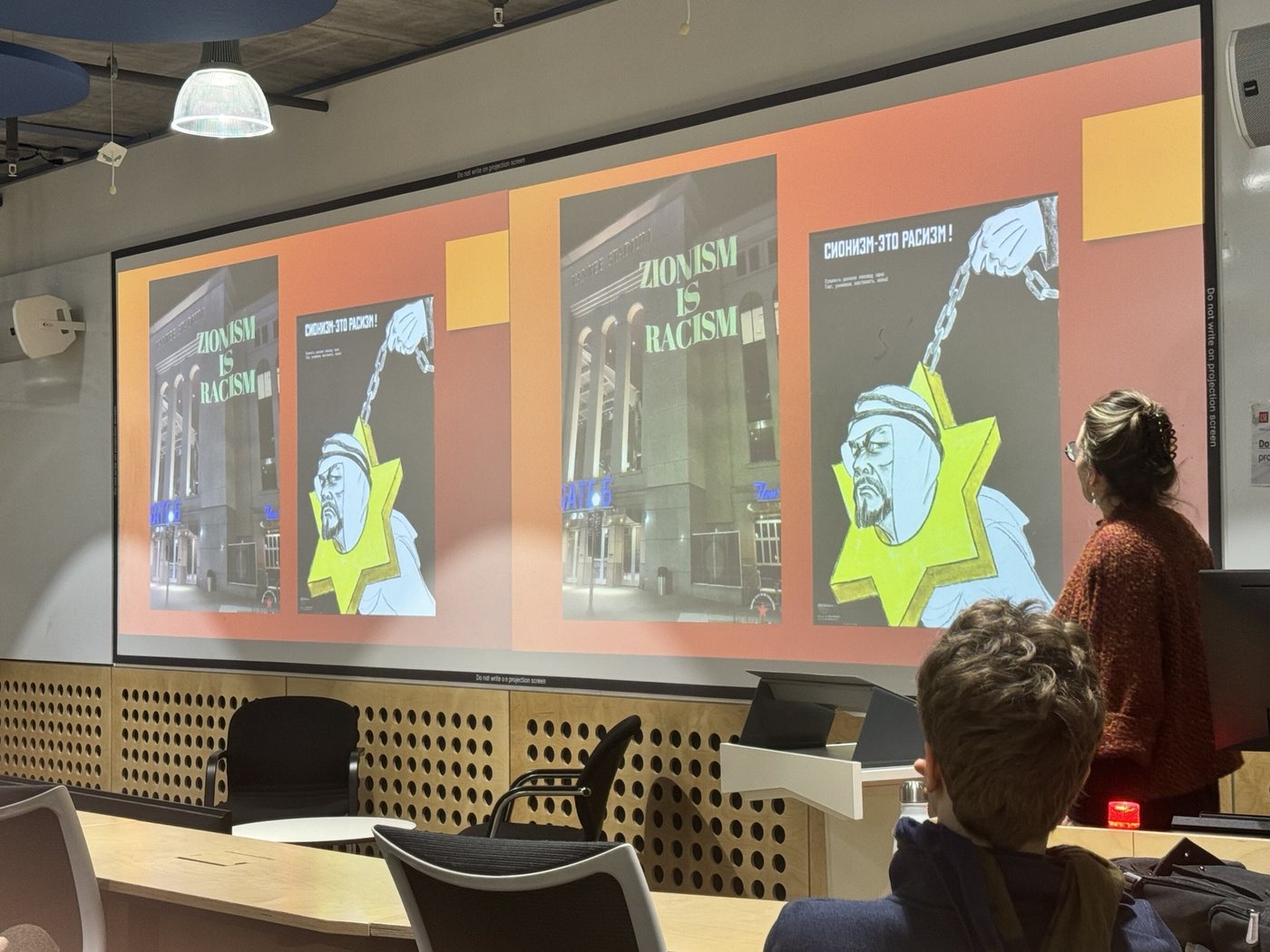
A lot of the lecture focused on how this material was spread. Books and films were used to push an anti-zionist message in a way that tried to avoid looking too much like Nazi propaganda, even though, as Tabarovsky mentioned, unearthed diary entries and uncovered letters showed that far-right Russian readers were often influenced by books originally written for far-left audiences. Translated material was the biggest factor in spreading the message to the West. Diplomatic channels also pushed it abroad. She mentioned that the French government took this far enough that they were sued over it. Soviet propaganda itself was very blunt and direct, but the slogans that spread internationally were tailored to different audiences. The idea of “Zionism = Nazism” was used more for Europe, while “Israel = Apartheid South Africa” was aimed at Africa. Other slogans included “Zionism = racism” and “Zionism = terrorism.”
One of the most striking parts of the lecture was about the 1973 World Festival of Youth and Students in East Berlin. The festival had 700,000 young attendees from across the world, which Tabarovsky said was very impressive for a Cold War event held in a socialist state. The Soviets linked their political ideas to emotional and contextual material - colour, music, atmosphere - to make them more relatable. There were stories of police mixing with hippies, which earned the event the nickname “Red Woodstock.” She also mentioned that the Soviets sent a student congress from Africa to march to festival organisers, warning that any spotted Israelis would lead to a boycott. She raised the possibility that the festival, or parts of it, may even have been staged. I had never heard about this event before, and it was one of the most interesting examples in the talk.
She also covered how this reached international institutions. In 1975, the Soviets pushed the UN to draft a resolution stating that “Zionism is racism.” The American ambassador at the time argued that the Soviets were inverting morality and human rights to shift geopolitics in their favour. Around the same time, the USSR sponsored congresses, celebrations and gatherings across the world, all with the same ideological message that Zionism was evil. Media transmission to the West was traced back to a journalist named Spartak Belgar (in my notes), who wrote to the New York Times about Soviet views on Jews, although it was quickly identified as propaganda.
The lecture also looked at the other side of the story. Israel’s victory in 1967 encouraged a resurgence in Jewish identity, increased immigration and worldwide support, and helped give rise to the Refuseniks. After this, Jewish voices were also being used internationally to condemn genocide. Tabarovsky also mentioned that Soviet money kept many of these ideas alive by being funnelled into communist parties around the world, but in the 1990s, when that funding dropped, many of those parties shifted in different and sometimes radical directions.
Overall, I thought the lecture made a strong case that a lot of the language being used today did not appear from nowhere, and that there is a Cold War history behind it. The clearest evidence she presented was the repeated use of the same slogans across decades and continents. I think there are still questions about how much of today’s discourse is directly inherited and how much has developed independently from postcolonial and modern political contexts, but the lecture made me see why those slogans travelled so effectively. The most useful idea I took from it was that propaganda often spreads more successfully when it is presented in academic or emotional language rather than as outright hostility, and that historians have to recognise both layers when they look at political language.