Entitled, Erroneous or Engineered? The Evaluation of Britain in Bengal.
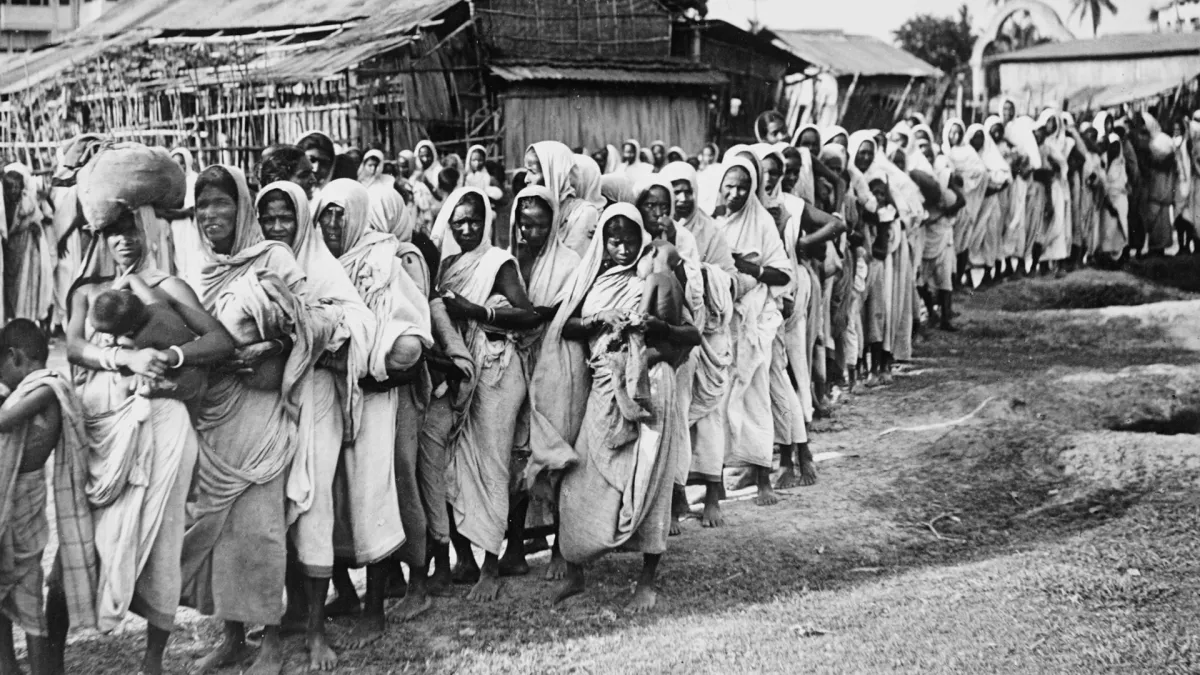
History professor Janam Mukherjee begins his book Hungry Bengal: War, Famine and the End of Empire with three devastating words a child begs to his mother: “Ma, phan dao.” That desperate plea echoed across Bengal in 1943. Children wandered through villages with swollen stomachs and skeletal limbs, asking strangers for scraps that did not exist. Corpses lay by roadsides in Kolkata while everyday life carried on around them. The Bengal Famine remains one of the darkest episodes of British rule in India, yet historians still disagree over who should bear responsibility. Some argue that the disaster was unavoidable in wartime conditions. Others see it as a famine shaped, deepened and accelerated by colonial policy. The evidence suggests that nature may have created scarcity, but British decisions turned scarcity into mass death.
One reason the British government faces such heavy criticism is that food did still exist in parts of India during the famine. Amartya Sen famously argued that millions starved because they lost the ability to buy food, not because Bengal had literally run out of it. Prices spiralled out of control. Rural labourers and fishermen found that wages no longer covered even basic rice. Meanwhile, wealthier groups connected to the military or urban administration remained protected. More recent historians, especially Madhusree Mukerjee, go further and place direct blame on British wartime priorities. Her work argues that the government in London repeatedly ignored requests for grain imports while continuing to build food reserves elsewhere in the Empire. Much of the criticism naturally centres on Winston Churchill. His remark about Indians “breeding like rabbits” has become infamous because it reveals more than simple prejudice; it suggests a frightening indifference towards colonial suffering. Even Churchill’s sarcastic question about why Mahatma Gandhi was “not yet dead” if the famine was so severe now reads with astonishing coldness. Taken together, these comments make it difficult to separate imperial policy from imperial attitude.
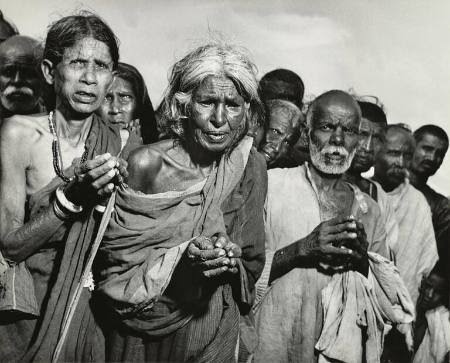
At the same time, the famine was not created in a vacuum. Bengal suffered genuine environmental disaster before starvation reached its peak. Historians such as Mark Tauger and Cormac Ó Gráda argue that the scale of crop failure is often underestimated in popular accounts. In late 1942, a cyclone tore through parts of Bengal and destroyed large areas of the aman rice crop. Salt water flooded farmland. Then disease spread through the remaining harvest. Brown spot fungus damaged rice plants across the region, and some estimates suggest devastating losses in yield. From this perspective, famine conditions were already forming before British policy fully worsened the crisis. It would therefore be too simplistic to claim that officials simply invented the famine out of cruelty. Nature mattered. War mattered too. The Japanese occupation of Burma cut off a major source of imported rice, leaving Bengal far more vulnerable than before. Yet even if shortages began naturally, the colonial response consistently made conditions worse rather than better.
This becomes clearest when examining wartime policy on the ground. In Hungry Bengal: War, Famine and the End of Empire, Janam Mukherjee describes the famine as a slow violence created by imperial priorities during the Second World War. British authorities feared a Japanese invasion after the fall of Burma, so they introduced the “Denial Policy”. Boats were seized or destroyed to prevent them being used by enemy forces. Rice stocks were removed from coastal areas. Militarily, the policy may have appeared logical. Economically and socially, however, it was disastrous. Bengal relied heavily on boats for trade, fishing and the transport of food between communities. Once that network collapsed, local shortages quickly intensified. Inflation added further pressure. Food prices rose sharply while ordinary workers struggled to survive. The government also avoided formally declaring a famine for far too long, which meant relief systems outlined in the Famine Codes were never fully activated. Millions were left exposed by a state that seemed more concerned with imperial defence than human survival.
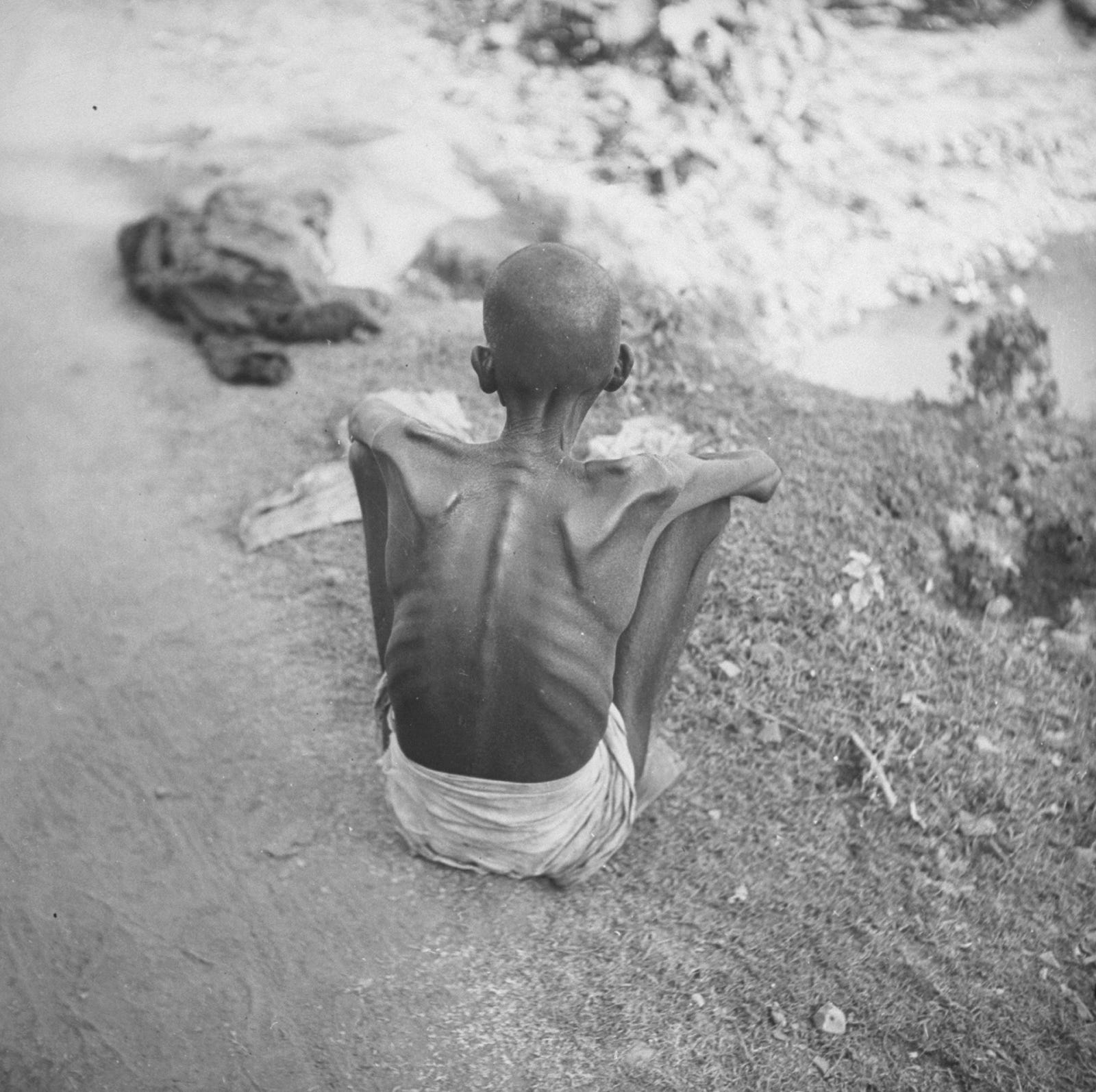
The suffering itself was captured most powerfully by Chittaprosad Bhattacharya. His sketches of starving families, abandoned children and bodies lying beside animals remain deeply unsettling even today. They feel immediate. Unpolished. Angry. Vultures and stray dogs appear repeatedly in his work, not only as symbols of death but as reminders that famine strips society down to something primal. People were reduced to searching for survival alongside scavengers. British authorities later seized and destroyed many copies of his work, which only reinforced the idea that colonial officials feared what those images revealed. Art became evidence.
Ultimately, the Bengal Famine cannot honestly be explained through one cause alone. Environmental disaster, crop disease and wartime disruption all contributed to the crisis. Yet none of those factors fully explain why around three million people died. British policy consistently prioritised military strategy and imperial stability over Bengali lives. Relief arrived too slowly. Grain was not redirected in time. Economic controls failed ordinary people almost completely. The famine therefore stands not simply as a natural tragedy, but as a political and moral failure of empire.